Last updated 2026-09-28.
An EV charger adds a new question to the home’s electrical installation. It does not provide an automatic answer that the switchboard must be replaced. The useful outcome is an explanation of what the proposed arrangement needs, what the existing installation can support and why any additional work is recommended. A larger package does not necessarily fit your needs better.
Request a callbackAn observed constraint should drive the recommendation
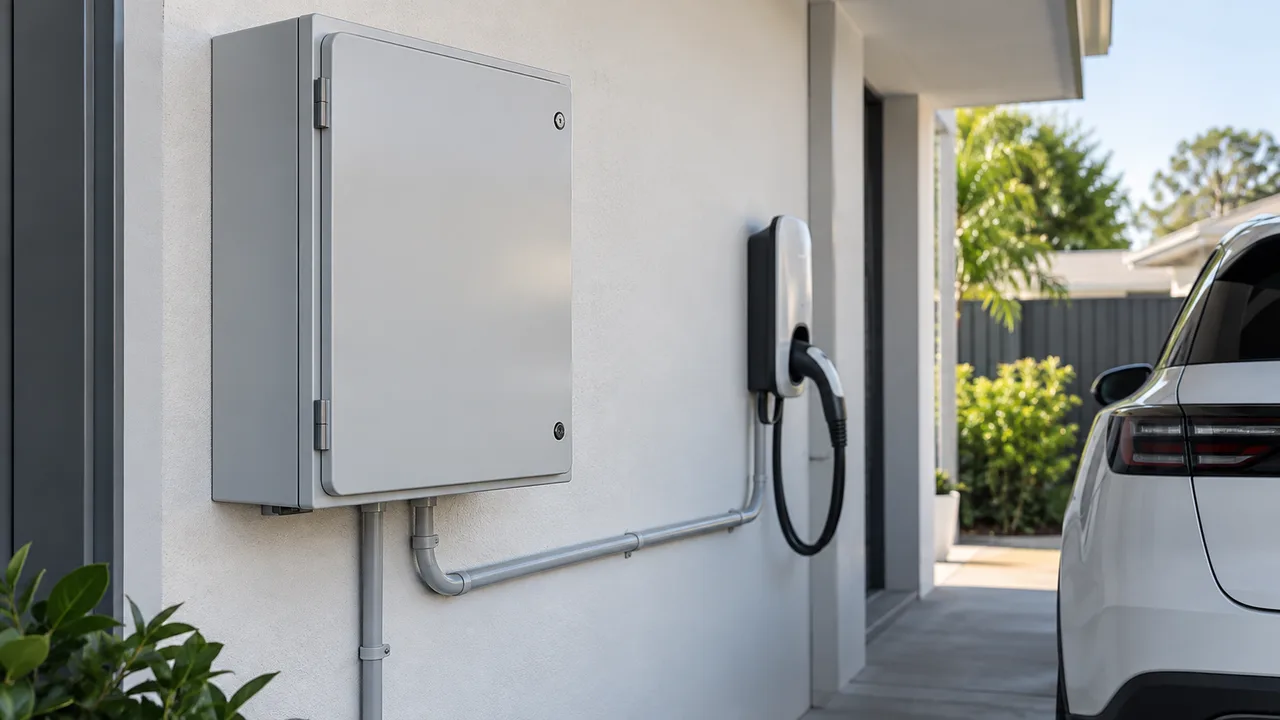
A contractor can assess the actual board and proposed equipment together. Condition, available space, protective devices, supply and household demand may affect the design. A photograph can help introduce the situation, but it cannot replace the observations needed to establish that design.
The switchboard guide distinguishes a capacity finding from an automatic replacement. Ask which observed issue supports each recommended item. A clear explanation makes it easier to understand the difference between work necessary for this charger, a separate repair and an optional improvement. It does not require you to diagnose the installation yourself.
Keep equipment assumptions visible
The proposed charger model and operating setting matter because a quote relates to a particular arrangement. A unit that can operate at several settings should not be treated as a promise that its largest advertised setting will be available at the property.
Energex’s current EV connection guidance explains dedicated-charger options and network considerations. The contractor should identify the arrangement on which the proposal relies. The three-phase guide is useful when a product label has made a supply question sound simpler than it is.
Household demand belongs in the assessment
A charger used alongside cooking, cooling or other major loads may present a different question from the same charger used at another time. An assumed average household profile is not a finding about your home. Describe the routine so the contractor can consider it with the installation.
The load-management guide explains why a control may change charging behaviour. Depending on the actual design, a different setting or control may be considered alongside other options. It should have an intelligible purpose and limits, rather than being sold as a universal alternative to all supply or board work.
Ask what each proposed change achieves
A board alteration may address a particular condition, provide space for equipment or form part of a wider improvement. Those purposes should be distinguished in the written scope. Otherwise a visitor can struggle to tell which work belongs to the original charging request.
A separate explanation and price for wider work helps you compare proposals. It also prevents an optional improvement being mistaken for a condition of installing any charger. The quote comparison guide considers that commercial distinction. It does not set a fair price or determine that a contractor’s finding is wrong.
Prepare the information for a site assessmentLeave fixed electrical diagnosis to licensed people
A homeowner does not need to remove covers, identify a protective device or measure supply capacity to begin an enquiry. Keep equipment closed and describe any known concern in ordinary language. That might be an earlier recommendation, a planned appliance change or uncertainty about an existing installation.
Queensland’s electrical licence guidance explains the licensed-work framework. Check the contracting business through the Electrical Safety Office licence search before engaging it. A page about a switchboard is not an instruction to inspect live electrical equipment.
Protection is specific to the installation
A generic diagram cannot decide the appropriate circuit and protection for every vehicle, charger and home. Equipment instructions and the actual installation must be considered together. Ask the contractor to explain the proposed protection in relation to the equipment it covers.
The Energex EV technical guidance supports discussion of current dedicated-charger arrangements. The safety guide also considers practical placement and movement around the charging space. Neither source makes a named device suitable for your property without assessment.
A usable route is part of the board question
A suitable point at the board does not by itself create a convenient charging position. The fixed route still needs to reach the bay in a practical way. Access through an enclosed area or property controlled by others may affect the scope.
The home installation guide joins those decisions together. For a house, describe the normal parking position and likely equipment location. For shared parking, authority for the route may be a separate dependency. A recommendation that discusses only the board can leave the everyday result unclear.
Compare the capability with your actual routine
A proposal should explain what charging behaviour you are buying, not only which equipment is being changed. The charging-time calculator helps compare an energy target with a parking window using your own figures. It does not verify a sustained rate or a property’s available capacity.
A long parking window and a short turnaround create different customer priorities. Clarifying that priority helps you understand whether a proposed improvement changes the result you want. It may also reveal when an advertised maximum is less relevant than predictable use from a suitable parking space.
A written scope should survive a clear question
Before accepting work, understand the charger, setting, route, circuit and any board changes named in the proposal. Ask what would require reassessment if the equipment or household demand changes. That prevents one accepted arrangement from becoming a blanket assumption about later additions.
You can send an enquiry with a genuine uncertainty. A potentially available contractor may discuss the property and provide its own assessment and written scope. This website does not inspect the switchboard, verify a provider for the enquiry or guarantee a response. The outcome to seek is a site-specific reason for the work, not an unexplained automatic upgrade.
Request a callback