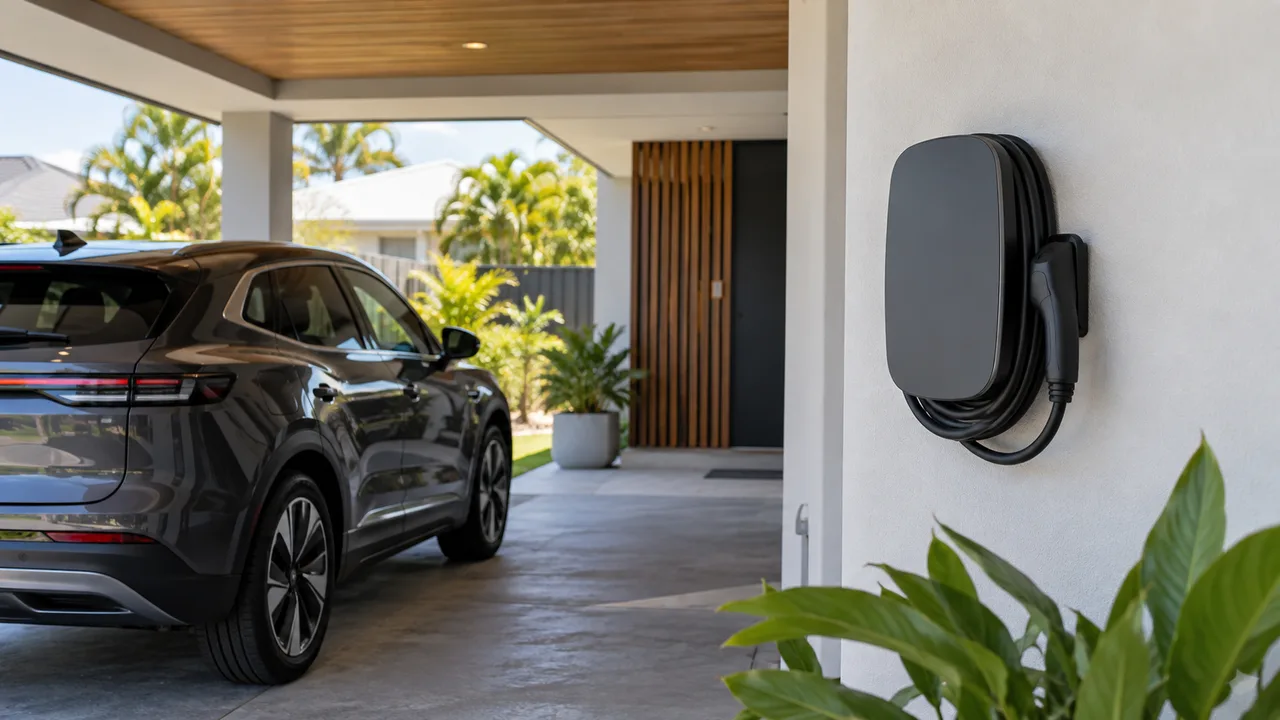
Home EV Charger Installation
Plan and install a dedicated home EV charging circuit and wall unit.
What to confirm first
A site assessment should consider the charger specification, parking position, cable route and the existing electrical installation before work is scoped.
Begin with where the vehicle normally parks and whether a cable can be routed safely without obstructing normal access. A charger selection should follow the site assessment rather than drive it.
Ask the contractor who accepts the work to explain the proposed circuit, protective devices and cable route in writing. Keep that scope with the equipment instructions and completion records.
Queensland fixed electrical work should be carried out by an appropriately licensed electrical contractor. The relevant official electrical-safety and distributor requirements should be checked for the actual installation.
Start with parking and equipment
A home charger decision starts with the bay the vehicle actually uses, not with a generic charger rating. Note whether the car reverses in or drives through, where its inlet sits, and whether a parked vehicle, door or pedestrian route would conflict with the proposed cable path. This helps make the first discussion about a usable permanent arrangement rather than an extension lead or a temporary workaround.
Circuit and cable-route decisions
The equipment instructions, the existing switchboard and the route from board to charger all matter together. A licensed contractor assessing the property can determine the circuit, protective devices, isolation and cable installation method appropriate to the proposal. It is sensible to ask what assumptions were made about the charger model, its maximum setting and future changes before agreeing to a scope.
What a written scope should settle
A useful written scope identifies the charger or equipment to be connected, the proposed mounting position, the route and visible constraints. It should make clear which access, patching, civil work or approvals are outside the electrical work. If the route crosses a driveway, garden, common access area or enclosed ceiling, ask how that changes the work rather than assuming every route has the same complexity.
Before the inspection
Before an inspection, collect the charger product information if a model is already chosen, photos of the switchboard and parking area, and any access restrictions. Explain where the vehicle is normally parked and when charging is likely to occur. These practical details do not replace an inspection, but they help the contractor decide what needs to be checked on site and what questions remain open.
After installation
Queensland electrical work must be performed by an appropriately licensed electrical contractor. Once a contractor accepts the job, keep their written scope, equipment instructions and completion documentation together. Those records are more useful than a generic online checklist if the charger is replaced, the parking arrangement changes or another electrician later needs to understand the installation.
Practical questions for this service
Consider the weather and day-to-day use of the final position. The question is not simply whether the equipment is labelled for an environment; the mounting surface, reach of the connector, vehicle position and access for ordinary cleaning or maintenance should make sense together. Point out gates, storage, steps and drainage features that could affect the route when the contractor inspects.
If the property is rented, part of a community title scheme or subject to renovation plans, identify that before a scope is accepted. Electrical feasibility does not itself give authority to alter a wall, common area or garage. Written permission and a clear description of the final equipment position reduce the risk of installing an arrangement that later has to be moved.
Ask how the proposal handles any existing solar, battery or energy-monitoring equipment without assuming those products make a charger installation automatic. Their presence can be relevant to the assessment, but product marketing is not an electrical design. Give the contractor the available product details so they can determine what requires checking at the actual premises.
A comparison between proposals is most useful when each one describes the same assumed charger, parking position and cable route. If one quote omits a route constraint or treats a site visit as optional, clarify that difference before using the price or headline scope to decide. A lower figure is not comparable if the underlying electrical and access assumptions differ.
Use the enquiry to assemble the property facts before an outcome is assumed. Include the parking position, chosen equipment if known, possible route and access constraints. A contractor can then assess whether an inspection is useful and explain the scope, timing and compliance information that applies to the actual premises.
Capture the right facts
Before approving home charging work, make a short decision record: chosen equipment if known, normal parking position, proposed mounting location, visible route constraints, permissions and questions for the contractor. This makes it easier to distinguish facts from preferences at inspection. It also leaves room for the contractor to change the approach when the electrical installation, access or product instructions show that the initial idea is unsuitable. A completed scope should describe the work ultimately accepted, not simply repeat the original enquiry.
Assessment pathway
For a home charger enquiry, share the selected equipment if known, normal vehicle position and photos of the board and proposed wall. A licensed contractor can then decide whether the actual route and electrical installation warrant an inspection before any scope or date is offered.