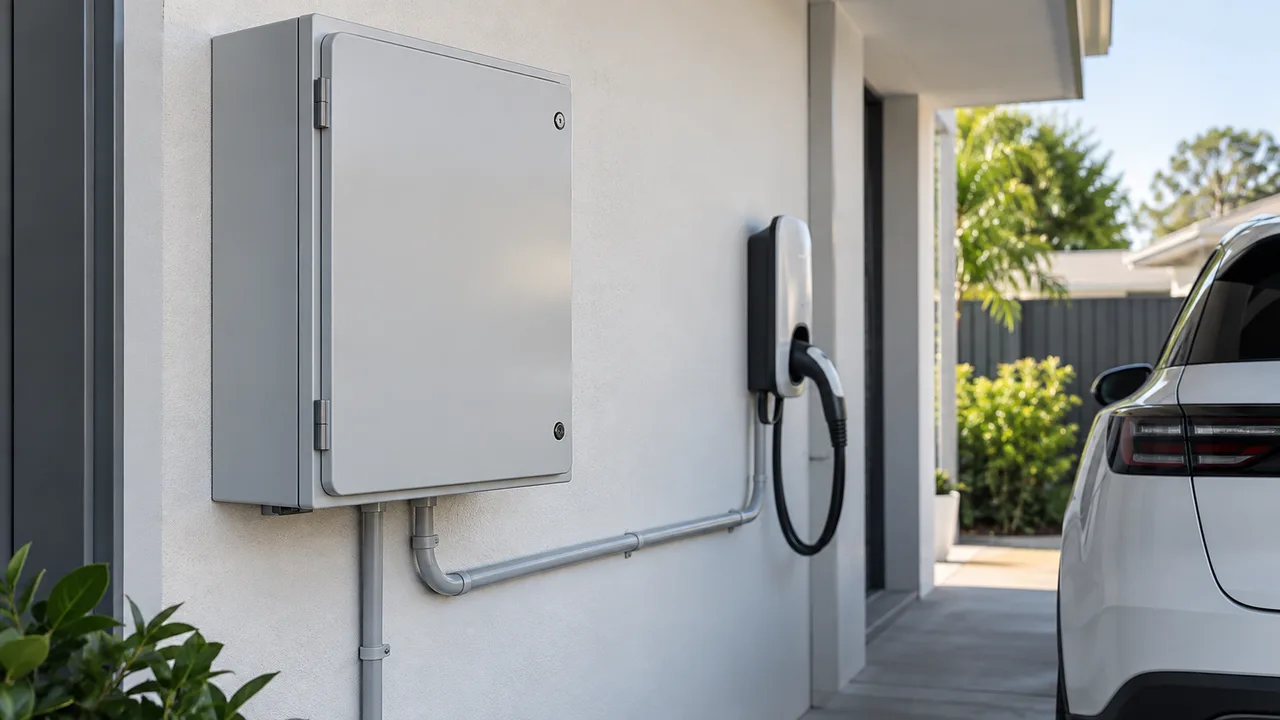
Switchboard and Capacity Upgrades
Assess available supply capacity before adding EV charging demand.
What to confirm first
Capacity and condition are assessed at the actual switchboard; an upgrade should be recommended only where the inspection and load assessment support it.
Existing boards vary in condition, spare capacity and the way household demand is distributed. A visual estimate or a charger advertisement is not enough to determine whether an upgrade is needed.
The proposed scope should identify the assessment findings, equipment affected and any practical constraints before work is approved. Ask for the reason for each proposed change.
Keep the resulting electrical documentation. It helps a later contractor understand the installation if the charger, household load or supply arrangement changes.
Why capacity is assessed rather than assumed
An EV charger can add a significant new electrical load, but its presence does not automatically mean the switchboard must be replaced. The existing board, supply arrangement, household demand and proposed equipment need to be considered at the property. A proper assessment avoids treating a photograph, an online advert or a neighbour’s installation as evidence that the same work is required at this address.
Condition, space and protection
The inspection may consider board condition, available space, existing protective devices, identification and the way circuits are arranged. These observations help the licensed contractor decide whether the charger can be designed around the current installation or whether changes are warranted. Ask for the finding behind each proposed item, especially where the scope includes more than the new dedicated charger circuit.
Separating an upgrade from a charger quote
Keep the charger decision and any broader switchboard work clear in the written scope. A proposal should distinguish work necessary for the accepted charger arrangement from optional improvements or separate defects. That distinction makes it easier to compare proposals and to understand what remains if the equipment choice, cable route or charging preference changes before work begins.
Information to have ready
Provide clear photographs of the board with the cover closed and, if safely available, its surrounding access area. Record other major electrical loads and typical times of use, such as cooking, air conditioning or pool equipment. The contractor still needs to inspect and test where appropriate, but this context makes it less likely that an early conversation overlooks a practical load or access constraint.
Keeping the outcome usable
After work, retain the contractor’s documentation and any revised circuit information with the charger materials. It supports future decisions about additional loads, a battery, solar changes or replacement equipment. It also avoids asking a later contractor to infer the purpose of alterations from a board alone, which is not a reliable substitute for the original scope and completion records.
Practical questions for this service
Capacity is not just a number on a circuit schedule. The assessment needs to relate present household use to the proposed charger and the actual way circuits are protected and arranged. Explain unusual loads, recent extensions and planned equipment changes. This practical history can help the contractor decide which observations need verification rather than assuming the board represents a standard installation.
Access around a switchboard matters for inspection and future maintenance. Before an appointment, identify cupboards, stored goods, gates or tenancy restrictions that affect safe access. Do not remove covers or attempt to identify live components yourself. The useful contribution is to describe the space honestly so the contractor can plan the inspection and explain any access requirement.
Where a proposal identifies existing defects or non-charger work, ask whether the item is necessary before the charger work can proceed, recommended as a separate improvement, or outside the accepted scope. This question does not dispute a technical finding; it clarifies the decision. It can also prevent a customer from misunderstanding optional work as a guaranteed requirement for every EV charger.
A staged project can be sensible when property access, equipment choice or broader renovation work remains undecided. The contractor should explain what can be assessed now and what must wait for final facts. Avoid relying on a preliminary comment as approval to order equipment or start related building work when the board and proposed load arrangement have not been confirmed.
Before agreeing to a switchboard change, ask the contractor to identify the finding that makes it necessary for the proposed charger. Confirm whether the written scope includes the dedicated circuit, protective devices, testing, labelling and any supply-side work, or whether those are separate items. If a different charger or a lower charging setting would change the scope, ask for that option to be explained before equipment is ordered.
Capture the right facts
The decision record for a switchboard-related enquiry should identify the charger proposal, the current board access conditions, major household loads and any planned electrical changes. It should not diagnose the board or decide that an upgrade is required. That boundary gives the licensed contractor useful context while preserving their responsibility to inspect the actual installation, explain findings and set out only the work they are prepared to accept. Keep the final scope separate from preliminary suggestions made before inspection.
Assessment pathway
For switchboard capacity questions, provide the charger proposal, major household loads and safe access details around the board. The contractor can then inspect the installation and explain whether any work is required for the assessed arrangement rather than assuming an upgrade is part of every charger project.