EV Charging Safety and Compliance
Check circuit protection, equipment suitability and installation requirements.
What to confirm first
Fixed electrical work needs appropriate design, installation and completion documentation from the licensed contractor who accepts the job.
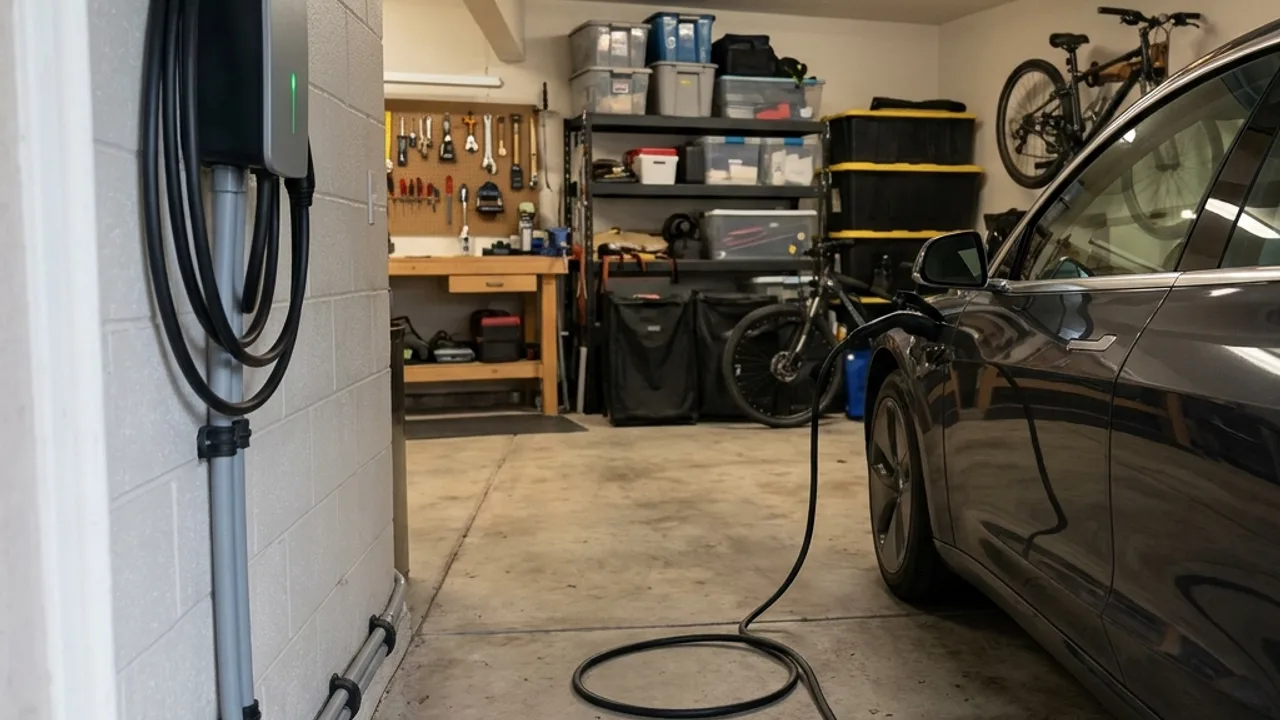
Safety planning begins with the actual vehicle position, cable route and equipment location. A suitable arrangement should not depend on improvised leads or an obstructed path.
The contractor who accepts the job determines the appropriate installation method and applicable requirements. Ask them to identify the equipment, protection and testing included in the scope.
Retain the completion paperwork and product information. It provides a reliable starting point for maintenance or later changes.
Make the charging position safe to use
Safety starts with the physical charging routine: where the vehicle parks, where people walk, and whether the proposed equipment can be reached without a cable lying across a path. A permanent charger location should be considered in the context of the actual parking pattern and building access. This practical review is important even when the desired equipment looks straightforward on a product page.
Fixed work needs a site-specific method
The licensed contractor who accepts the work determines the appropriate electrical installation method for the premises. Their assessment can consider the equipment instructions, circuit arrangement, protection, isolation, cable route and the condition of the existing installation. Requesting a clear explanation of what is included helps separate genuine electrical scope from assumptions made before anyone has inspected the property.
Avoid improvised charging arrangements
A portable lead or improvised route is not a substitute for a planned fixed installation. If the normal charging routine would require a cable through a doorway, across a walkway or around a vehicle, raise that fact at the assessment. The right response depends on the site; it should not be inferred from a generic online diagram or treated as a reason to bypass licensed electrical work.
Records and product instructions
Keep the charger’s instructions, the contractor’s scope and completion documentation after work is completed. These materials identify the product and the arrangement that was assessed. They also help a later electrician evaluate changes without guessing which equipment, settings or route were originally intended, particularly if the property is sold or the charger is replaced.
When to seek a fresh assessment
Seek a new assessment when the location, equipment, supply arrangement or charging routine changes materially. A prior scope may not answer questions created by a different vehicle, a remodelled garage, a new major appliance or altered parking. Treating completion paperwork as a record of the completed work rather than a blanket approval for every future change is the cautious approach.
Practical questions for this service
The product manual is important, but it should be read alongside a site assessment rather than used as a universal installation diagram. It identifies equipment requirements; it does not know the property’s switchboard, vehicle position, construction or access routes. Give the contractor the exact model details so their scope can address the equipment actually intended for use.
Plan for children, visitors and ordinary household movement around the vehicle. A charging position that works only when a garage is empty or a gate stays open may create an avoidable access problem. Describe normal use patterns during the assessment, including shared driveways and pedestrian routes, so the contractor can identify issues that a product photograph cannot reveal.
If water exposure, corrosion, physical impacts or outdoor mounting are relevant, point that out without attempting to select a technical remedy yourself. The site conditions influence the installation method and equipment position. A cautious scope records what was assessed and what equipment was selected, rather than making a broad online claim that any charger can be installed anywhere.
Testing and completion records are part of the result, not optional paperwork to chase after an installation. Before accepting work, ask what documentation the contractor expects to provide and retain it when work is completed. If a later question arises, those records establish what was installed and by whom better than a verbal recollection of the original arrangement.
If there is damage, a suspected fault or an unsafe electrical condition, use an appropriate urgent electrical-safety pathway and keep clear of affected equipment. Planned charger work is a different decision: identify the usual parking position, proposed equipment location and any weather or pedestrian exposure so a licensed contractor can assess a suitable fixed installation method.
Capture the right facts
For safety and compliance questions, record the ordinary parking and pedestrian pattern, equipment proposed, any outdoor exposure and any change to the property that could affect the route. Do not attempt to decide protection, wiring methods or compliance from a checklist. The licensed contractor who accepts the work must assess the premises and identify the appropriate scope. Keeping the final documents and product instructions means future changes can be considered using reliable facts rather than a memory of a general web explanation.
Assessment pathway
For safety planning, describe the routine parking position, pedestrian access, equipment location and any outdoor exposure. A licensed contractor can assess the fixed installation method for those conditions and identify the documentation that should accompany accepted work.