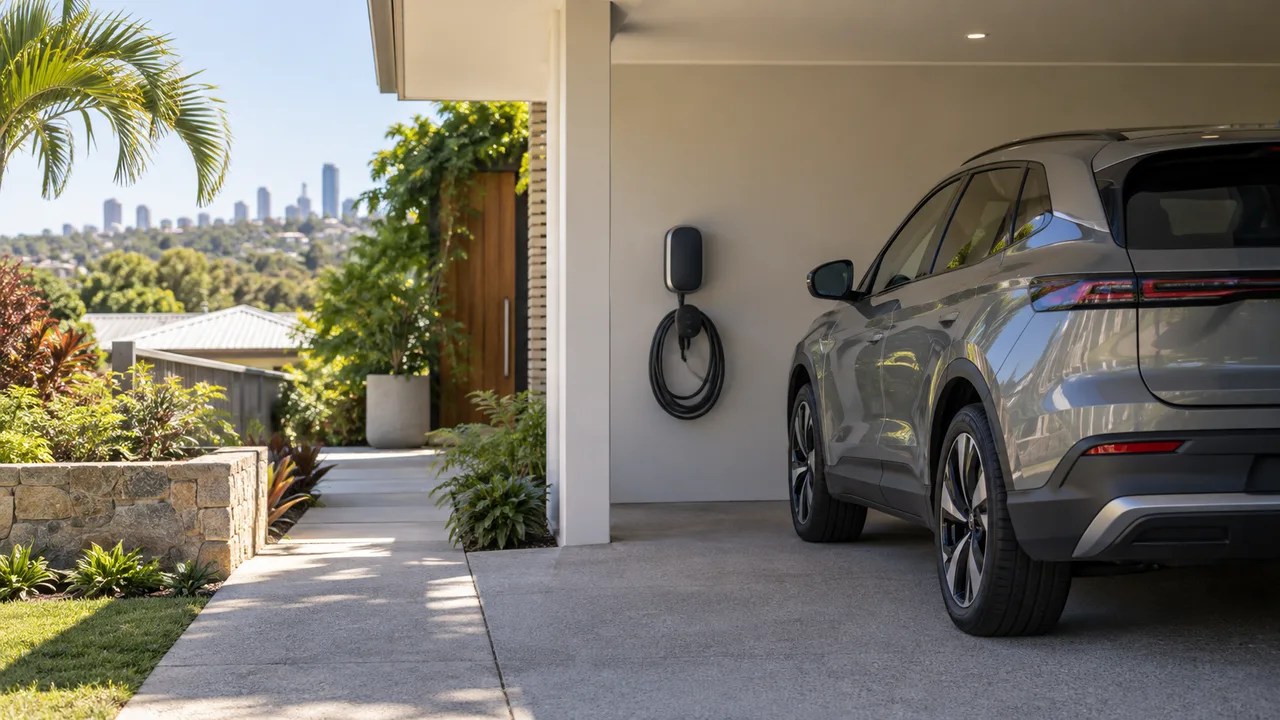
EV Charger Installation in Paddington
In Paddington, a charger enquiry should begin with the real path between the parked vehicle and the electrical installation. A short distance on a plan may not be the path that can be fixed safely. We help you identify the site facts worth resolving before equipment is chosen.
How to frame an EV charger assessment
Paddington charging projects benefit from tracing the intended route on paper before comparing equipment. Mark the usual parking position, proposed equipment location and existing switchboard, then note changes in level, gates or narrow access that a contractor would need to see. A cable route that looks short in a photo can involve a different mounting approach once the usable path and safe fixed position are reviewed.
Electrical design decisions
A charger should be assessed with the household's electrical demand, not as an isolated appliance. The charger specification, cable route, board condition and protective devices form one installation question. If a switchboard change or load-management option is raised, ask what site observation supports it. This keeps necessary work distinct from optional ideas and gives a clearer basis for comparing a written scope.
Local context for Paddington
ABS recorded 758 Paddington flats or apartments in 2021, or 21.7% of occupied private dwellings. Council's historical Paddington material describes development along ridges and lower side streets. For EV charging, the useful implication is to describe the actual route between parking and the electrical installation, including any level change that is visible at the premises. The historical description is not evidence that a particular house has stairs, retaining structures or a difficult route. Those practical details are best confirmed during assessment, together with access to the proposed mounting position.
Prepare a useful installation brief
A Paddington brief is clearest when it includes photos from the parked vehicle towards the proposed charger position and from that point back towards the board. Note any gate, stair, retaining edge or storage area that changes the workable path. This does not decide the design remotely; it helps ensure an inspection starts with the right practical questions rather than an assumed straight-line cable route.
A useful next step is to compare the possible mounting positions against the route that can genuinely be used. Ask what protection, fixings and access are proposed, and why. That creates a practical discussion about the permanent installation instead of treating a charger rating as a complete answer to the property layout.
The best equipment location is not simply the wall nearest the car. It needs to work with the vehicle's everyday parking position, the permanent cable path and safe access around the space. During an assessment, ask the contractor to explain how the proposed position responds to the route they have inspected. That practical explanation is more useful than a generic recommendation because it links the charger selection, mounting decision and board work to the conditions observed at this particular premises.
In Paddington, review the actual path rather than estimating from the straight-line distance between car and board. A route that accommodates the property layout and normal movement is the useful basis for selecting a fixed charger position.
For Paddington, check the proposed fixed path in ordinary use before treating it as final. The terrain context helps frame the question; the inspection determines the workable installation route.
EV charger installation across Brisbane
Compare the local planning notes for other Brisbane locations.
EV charger installation guidance
EV charger questions for Paddington
These questions are answered during planning before a fixed electrical installation is agreed.